
Introduction:
AI agent development has moved from an emerging technology curiosity to a commercially deployable capability that is already reshaping how Canadian businesses handle customer service, sales qualification, internal workflow coordination, and routine decision-making — without requiring a human to manually trigger each individual step of the process. For Vancouver businesses competing in increasingly demanding markets, the ability to deploy autonomous AI systems that understand context, make decisions, and complete multi-step tasks independently is no longer a future consideration. It is a present competitive reality that is already separating businesses that scale efficiently from those that scale by adding proportional headcount.
The distinction between genuine AI agent development and simpler automation technologies is significant and commercially consequential. Traditional rules-based automation executes predetermined sequences without any ability to interpret context, handle variation, or chain together the kind of multi-step reasoning that real business interactions require. AI agents, by contrast, can hold extended contextual conversations, determine what actions those conversations require, execute those actions through connected business systems, evaluate the outcomes, and adapt their approach accordingly — all within a single autonomous workflow that delivers results rather than simply advancing a script.
This article examines exactly what professional AI agent development involves, how it differs from chatbots and conventional automation, the specific use cases where AI agents deliver the strongest commercial return for Canadian businesses, how Zerotens approaches the development and deployment process, and why the businesses that invest in AI agent development now are building autonomous operational infrastructure that will compound in capability and competitive value for years to come.
What Is AI Agent Development?
AI agent development is the process of designing, building, testing, and deploying autonomous AI systems that can understand context, reason about goals, execute multi-step tasks, and interact with connected business systems — without requiring explicit human direction at each individual step of the workflow. This distinguishes AI agents from both conventional rules-based automation, which can only follow predetermined logic sequences, and from basic chatbot technology, which typically handles single-turn question-and-answer interactions without the ability to take actions in connected systems or maintain context across extended, multi-stage conversations.
A properly built AI agent combines several integrated capabilities: a large language model that provides the natural language understanding and reasoning capability to interpret user input, identify intent, and determine appropriate responses; a set of tools and API connections that allow the agent to take real actions in connected business systems; a memory architecture that maintains context across extended interactions; and an orchestration layer that coordinates how the agent applies these capabilities toward completing defined goals. The quality of AI agent development is determined by how well these components are integrated and how accurately they reflect the specific workflows, policies, and business logic of the organization deploying them.
AI Agent Development vs Chatbots and Rules-Based Automation
The clearest way to understand what professional AI agent development achieves is to contrast it with the simpler technologies it supersedes. A chatbot, in its most common form, is a decision-tree system that routes users through predetermined response sequences based on keyword matching or simple intent classification — capable of handling scripted interactions but unable to deal with any variation that falls outside the predetermined script, and unable to take any action in connected systems beyond presenting information from a knowledge base.
Rules-based automation, the more sophisticated predecessor to AI agents, executes predefined process sequences with reliability and speed but with no ability to interpret context or handle the variation that characterizes real business interactions. A rules-based automation that handles invoice processing can process every invoice that matches its expected format perfectly — but will fail on any invoice that deviates from that format in ways its rules do not anticipate. AI agent development produces systems that can read, interpret, and process invoices across varied formats, handle exceptions by reasoning about them, request clarification when needed, and route genuinely ambiguous cases to human reviewers — while handling e
very routine case autonomously and accurately.
The Technical Architecture of a Professional AI Agent
Professional AI agent development at Zerotens produces agents built on large language models, most commonly from leading providers including OpenAI, Anthropic, and Google, combined with a custom tool layer that connects the agent to the specific business systems and data sources it needs to take action on behalf of the organization. This tool layer is what converts a sophisticated conversational AI into a genuine operational agent — without access to CRM systems, support ticketing platforms, inventory databases, scheduling tools, and communication channels, an AI agent can discuss a customer’s issue but cannot resolve it.
The integration architecture that Zerotens builds for every AI agent development project is calibrated specifically to the client’s existing systems stack — connecting to CRM platforms, support systems, calendar and scheduling tools, payment systems, inventory databases, and any other operational infrastructure the agent’s workflows require. This system integration work is often the most technically demanding component of professional AI agent development and is what most clearly separates purpose-built enterprise agents from generic chatbot deployments that lack the system connectivity to autonomously complete the workflows they initiate.
ZEROTENS INSIGHT
Let’s Build Something Smarter Together
AI Consulting Services: Powerful AI Strategies for Smarter Decision-Making
Why Canadian Businesses Are Investing in AI Agent Development
AI agent development is attracting growing investment from Canadian businesses across professional services, e-commerce, SaaS, logistics, and financial services for a reason that is straightforward once the economics are understood: AI agents scale without proportional cost increases, operate continuousl
y without shift-based staffing overhead, maintain consistent quality regardless of volume, and improve in capability as they accumulate operational data and refined training. These characteristics make AI agent development one of the few operational investments that becomes more valuable, rather than less, as the business it serves grows larger and more complex.
For Vancouver businesses managing rapid growth in competitive markets, the ability to expand customer service capacity, sales qualification throughput, and operational coordination without the hiring, training, and management overhead that equivalent human scaling would require is commercially significant. A single well-built AI agent can handle the interaction volume of 5 to 10 human staff members during peak periods, scale instantly to handle traffic spikes without degradation, and maintain consistent quality standards that human teams under volume pressure cannot always sustain.
The 24/7 Availability Advantage
One of the most immediately compelling commercial arguments for AI agent development for Canadian businesses is the elimination of the service availability gap that shift-based human staffing inevitably creates. A customer who reaches out at 11pm on a Saturday night, or during a statutory holiday period, or from a time zone 12 hours ahead of Vancouver — receives the same quality of autonomous service from a properly built AI agent as a customer reaching out during peak business hours on a Tuesday morning. This continuous availability is not achievable with human staffing at any cost level that makes financial sense for most Canadian businesses, but is a fundamental characteristic of AI agent deployment.
For Vancouver businesses with significant customer bases outside of Pacific Time — common for technology companies, professional services firms with national clients, and e-commerce businesses serving customers across Canada and into US markets — this 24/7 availability delivers direct commercial value through improved customer satisfaction scores, faster resolution of time-sensitive issues, and the elimination of customer attrition that occurs when businesses fail to respond during off-hours inquiry periods.
Consistent Quality at Any Volume
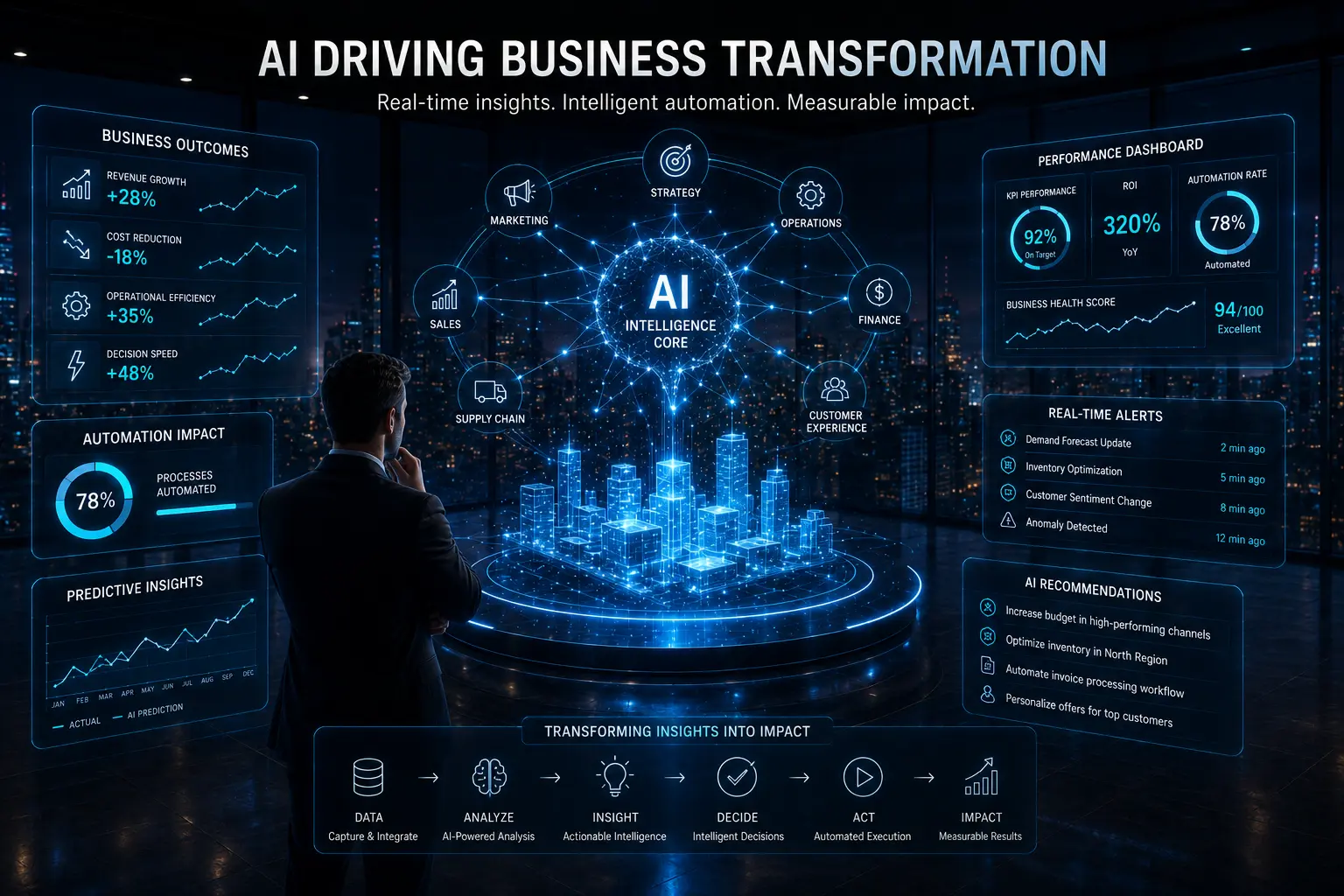
AI agent development delivers a quality consistency advantage that is difficult to achieve with human staffing across any business that experiences significant variation in interaction volume. Human service quality is sensitive to volume pressure — when interaction volumes spike, response times increase, errors become more frequent, and the quality of individual interactions declines as team members manage more simultaneous conversations than their optimal cognitive load allows. AI agents handle volume increases without any quality degradation, applying identical reasoning quality, policy compliance, and communication standards to the 500th interaction of the day as they applied to the first.
This quality consistency is particularly valuable for Canadian businesses where regulatory compliance and accuracy of customer communication carry legal or reputational consequences — financial services, healthcare technology, legal services, and real estate businesses where inaccurate or inconsistent customer communications can create liability exposure or regulatory risk.
Use Cases Where AI Agent Development Delivers the Strongest Returns
AI agent development delivers its strongest commercial returns in use cases that combine high interaction volume, contextual variation, and the need to take real actions in business systems — the precise combination of characteristics that makes human staffing expensive, inconsistent, or both. Zerotens has consistently found that the highest-ROI initial AI agent development deployments for Canadian businesses cluster around customer support resolution, sales qualification and lead management, appointment scheduling and coordination, and internal workflow orchestration.
Customer Support Agents That Resolve, Not Just Respond
Customer support represents the most mature and commercially proven application category for AI agent development — and the commercial case is compelling across every sector. A properly built AI agent for customer support does not simply answer questions from a knowledge base: it accesses live customer data from CRM and order management systems, executes account changes and adjustments autonomously, processes returns and exchanges, escalates complex cases to human agents with full context already gathered, and follows up with customers after resolution to confirm satisfaction — all without human involvement at any intermediate step.
Zerotens has deployed customer support AI agents for Vancouver clients across e-commerce, SaaS, and professional services sectors, consistently achieving autonomous resolution rates of 60 to 75% of inbound support interactions — meaning the majority of customer issues are fully resolved by the agent without any human involvement. Customer satisfaction scores in these deployments have matched or exceeded the scores achieved by the human teams the agents supplemented, because customers receive immediate responses at any hour rather than waiting in queue for available human staff.
Sales Qualification and Lead Management Agents
Sales qualification represents another consistently high-ROI application for AI agent develop
ment, particularly for Vancouver B2B businesses where the gap between inquiry volume and sales team capacity is a perpetual constraint on growth. A properly built sales qualification AI agent engages every inbound lead through natural, contextual conversation — gathering qualification data, answering product questions at depth, identifying budget and timeline parameters, and scheduling discovery calls with sales representatives when qualification thresholds are met, all without any human involvement until the lead has been qualified to a standard the sales team has defined.
The commercial consequence for sales team productivity is significant. Sales representatives who receive only pre-qualified, appointment-ready leads — rather than spending significant portions of their week triaging raw inquiries — consistently achieve higher conversion rates and higher average deal values than equivalent representatives who handle their own lead qualification alongside their closing responsibilities. AI agent development in the sales qualification context therefore delivers both efficiency gains (reduced time per qualified opportunity) and revenue performance gains (higher conversion rates on qualified opportunities).
Internal Workflow Orchestration Agents
Beyond customer-facing applications, AI agent development delivers significant operational value when deployed for internal workflow orchestration — coordinating the multi-step, multi-system processes that consume significant administrative capacity in growing organizations without contributing directly to revenue generation. Internal orchestration agents can manage project status tracking and reporting, coordinate resource allocation across teams and projects, process internal approval requests, generate and distribute routine internal reports, and handle the administrative communication that flows between departments during normal business operations.
According to research from Deloitte’s State of AI in the Enterprise report, organizations that deploy AI agents for internal workflow orchestration alongside customer-facing applications consistently report stronger overall operational efficiency gains than those deploying AI agents in customer-facing contexts alone — because internal orchestration eliminates the coordination overhead that scales proportionally with organizational complexity and headcount.
How Zerotens Approaches AI Agent Development
Zerotens’ AI agent development methodology begins with a comprehensive workflow mapping phase that documents the specific processes, decision logic, data sources, and system touchpoints that each agent will need to navigate — before any development work begins. This mapping phase is not a formality: it is the phase where the most commercially important discoveries in AI agent development consistently occur, because the gap between how organizations believe their workflows operate and how those workflows actually function in practice is almost always significant, and that gap determines whether the eventual agent will genuinely serve the business or fail in the edge cases that constitute 20 to 30% of real interactions.
The workflow mapping phase produces a detailed agent specification — a document that defines the complete decision tree the agent must navigate, every system integration the agent requires, the specific escalation criteria that trigger human handoff, the tone and communication standards the agent must maintain, and the success metrics against which the agent’s performance will be measured post-deployment. This specification is what allows Zerotens to build AI agents that reflect how the business genuinely operates rather than generic conversational AI templates that require extensive post-deployment reconfiguration to fit actual business requirements.
Testing Against Edge Cases Before Deployment
Zerotens’ AI agent development process includes extensive adversarial testing against the full range of real-world interaction scenarios — not just the straightforward cases that any competent AI agent should handle without difficulty, but the edge cases, exceptions, ambiguous inputs, and unusual scenarios that constitute the difference between a genuinely reliable operational agent and one that performs impressively in demonstrations but fails frequently in production. Every agent Zerotens deploys has been exposed to hundreds of real or realistic edge case scenarios before it handles its first live customer or internal user interaction.
This testing investment is what consistently distinguishes professionally built AI agents from quickly deployed generic solutions. The edge cases that slip through inadequate testing are precisely the interactions most likely to create customer dissatisfaction, compliance violations, or operational errors — because they are the cases where the agent’s reasoning is most challenged and where poorly calibrated systems are most likely to produce confidently wrong responses or inappropriate actions.
Integration, Monitoring, and Continuous Optimization
Professional AI agent development does not end at deployment — it extends into ongoing monitoring, performance analysis, and continuous optimization that ensures agents improve over time rather than plateauing immediately after launch. Zerotens builds monitoring infrastructure into every AI agent deployment, capturing interaction logs, resolution rates, escalation patterns, and user feedback data that feeds into regular optimization cycles.
This continuous optimization commitment is commercially important because the value of AI agent development compounds over time in proportion to the quality of post-deployment optimization. An agent that achieves 65% autonomous resolution on deployment day can reach 80% or higher through 6 months of systematic optimization — identifying the interaction patterns it handles poorly, improving its reasoning and system integration in those specific areas, and continuously narrowing the gap between its current performance and the ceiling of what autonomous resolution can achieve for the specific workflows it manages.
Building Toward Agentic AI — The Next Phase
The most sophisticated current applications of AI agent development are moving beyond single-agent deployments toward multi-agent architectures in which networks of specialized agents coordinate with each other to complete complex, multi-phase business processes that no single agent could handle effectively alone. In a multi-agent architecture, a customer inquiry might be handled by a triage agent that classifies and routes the interaction, passed to a specialized resolution agent that accesses relevant systems and completes the resolution, and then handed to a follow-up agent that schedules any required callbacks or dispatches confirmation communications — with each specialized agent handling the phase of the workflow it is optimized for.
Zerotens designs AI agent development engagements with this multi-agent future in mind — building agent architectures and system integration layers that can accommodate additional specialized agents as the organization’s AI agent deployment matures and expands. This design-for-expansion approach ensures that the initial AI agent development investment becomes a foundation for progressively more sophisticated autonomous operational capability rather than a standalone deployment that must be rebuilt from scratch when the organization is ready to expand its agent ecosystem.
PIPEDA Compliance and Canadian Market Considerations
Canadian businesses deploying AI agents must navigate PIPEDA compliance requirements governing how customer personal data is collected, processed, stored, and retained by automated systems — requirements that are specifically relevant to AI agent development because agents necessarily access and process customer data to complete the resolution workflows they handle. Zerotens builds PIPEDA compliance requirements into the data architecture of every AI agent it develops for Canadian clients, ensuring agents are compliant by design rather than requiring compliance retrofits after deployment.
For Vancouver businesses in regulated sectors — financial services, healthcare technology, legal services, and insurance — additional sector-specific compliance requirements apply to automated customer communication and decision-making systems, and must be reflected in the agent’s escalation logic, disclosure statements, and record-keeping architecture. Zerotens incorporates these sector-specific requirements into the workflow mapping and agent specification phases of AI agent development, ensuring compliance is a foundational design element rather than an afterthought.
FAQ — AI Agent Development
What is AI agent development?
AI agent development is the process of building autonomous AI systems that understand context, make decisions, and execute multi-step tasks toward defined goals — without requiring human intervention at each step. Unlike chatbots or rules-based automation, AI agents connect to business systems and complete end-to-end workflows independently.
How do AI agents differ from chatbots?
Chatbots handle scripted single-turn interactions from a knowledge base. AI agents built through professional AI agent development hold extended contextual conversations, take real actions in connected business systems, handle workflow variation through reasoning rather than rigid rules, and complete multi-step processes autonomously.
What business processes are best suited to AI agent deployment?
The highest-ROI applications for AI agent development are high-volume, contextually variable processes including customer support resolution, sales lead qualification, appointment scheduling, and internal workflow coordination — processes where AI agents deliver autonomous resolution rates of 60 to 75% and consistent quality at any interaction volume.
How long does AI agent development take?
Zerotens’ AI agent development timeline varies by workflow complexity and integration requirements. Focused single-workflow agent deployments typically reach production in 6 to 10 weeks from initial workflow mapping through testing and deployment. Multi-system, multi-workflow agent architectures require longer timelines calibrated to complexity.
How does Zerotens approach AI agent development?
Zerotens begins with comprehensive workflow mapping before any development, builds full system integrations and tests extensively against real edge cases before deployment, and provides ongoing monitoring and optimization that continuously improves agent performance after launch — building agents that reflect actual business operations rather than generic templates.
Ready to deploy AI agents that do more than answer questions? Connect with Zerotens to build custom AI agents that automate complex workflows, integrate with your business systems, and deliver measurable efficiency, productivity, and customer experience improvements.
Conclusion
AI agent development represents one of the most commercially compelling technology investments available to Canadian businesses in 2026 — not because the technology is impressive in demonstration, but because it delivers measurable operational efficiency, consistent service quality, and scalable capacity that compound in value as the businesses they serve grow larger and more complex. The Vancouver businesses and Canadian organizations that invest in professional AI agent development now are building autonomous operational infrastructure that will continue improving, expanding, and compounding competitive advantage for years after the initial deployment.
Zerotens approaches AI agent development with the discipline that produces agents that actually work in production — comprehensive workflow mapping, rigorous edge case testing, proper system integration, and continuous post-deployment optimization — rather than impressive demos that fail in the operational complexity of real business environments. From customer support and sales qualification to internal workflow orchestration and multi-agent coordination, every AI agent development engagement Zerotens delivers is built to serve the specific operational reality of the client’s Canadian business.
If your business is ready to deploy autonomous AI systems that handle real workflows and deliver real commercial results, AI agent development through Zerotens is exactly what that requires.